e-Meterai for SMEs, finance companies, property and HR: practical examples
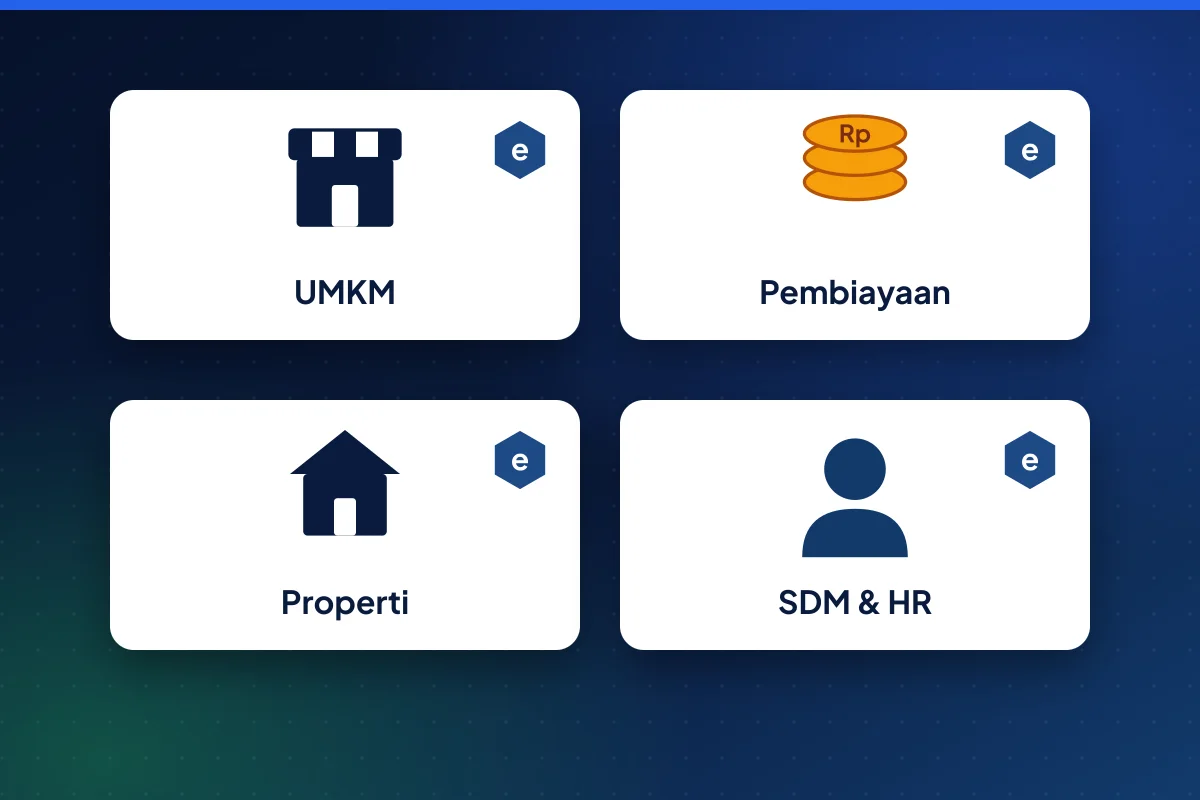
Every type of business has its own stamped documents. SMEs deal mostly with receipts and partnership agreements, finance companies with customer agreements and statements, property businesses with leases and down-payment receipts, and HR teams with employment agreements. For electronic documents, all of them can be stamped with e-Meterai without printing a single page.
 Resmi.ID Team · 5 min read ·
This article gives examples by sector based on the taxable documents in Law 10/2020, and also points out documents that do not need stamping so you do not pay more than necessary. The examples are general; build your internal policy with a tax adviser.
General benchmarks
- Agreements, letters of information, statements and similar letters are subject to stamp duty regardless of value. The elucidation of Article 3 lists powers of attorney, deeds of gift and wills among similar letters.
- Documents mentioning receipt of money or acknowledging settlement of a debt are subject to duty if the amount exceeds Rp5,000,000.
- Notarial deeds and land deeds are subject to stamp duty, but they follow the procedures of the officials concerned, not an ordinary e-signature workflow.
- The rate is the same for every document: Rp10,000.
The point at which duty becomes payable also differs. Agreements become payable when signed, while statements, letters of information and receipts become payable when handed to the party for whom the document was made (Article 8). For an electronic workflow, this means the e-Meterai should already be on the final file before the document is sent or marked complete.
SMEs
For SMEs, the biggest benefit of e-Meterai is not having to keep a stock of paper stamps and being able to serve customers remotely. Commonly stamped documents include:
- Sales or service receipts above Rp5,000,000, for example an event catering order or a small renovation project.
- Partnership agreements with resellers, agents or suppliers.
- Statements, such as a delivery commitment or a product authenticity statement requested by a partner.
For example, a garment business receives a Rp18,000,000 uniform order from a school. The order agreement is signed by both parties through a link, and the final payment receipt is sent as a stamped PDF. The owner does not need to visit the school just to hand over paper.
Finance companies
Finance companies and savings-and-loan cooperatives issue many agreements with customers. Documents usually subject to stamp duty include financing agreements, customer statements and powers of attorney. At high volume, two points need attention:
- 1Stamp Duty CollectorsCompanies designated by the tax office as collectors must collect, remit and report stamp duty on certain documents. If you are a collector, follow the collection and reporting rules.
- 2Savings exemptionArticle 7 exempts documents recording deposits of money with banks, cooperatives and deposit-taking bodies, so savings deposit slips do not need stamping.
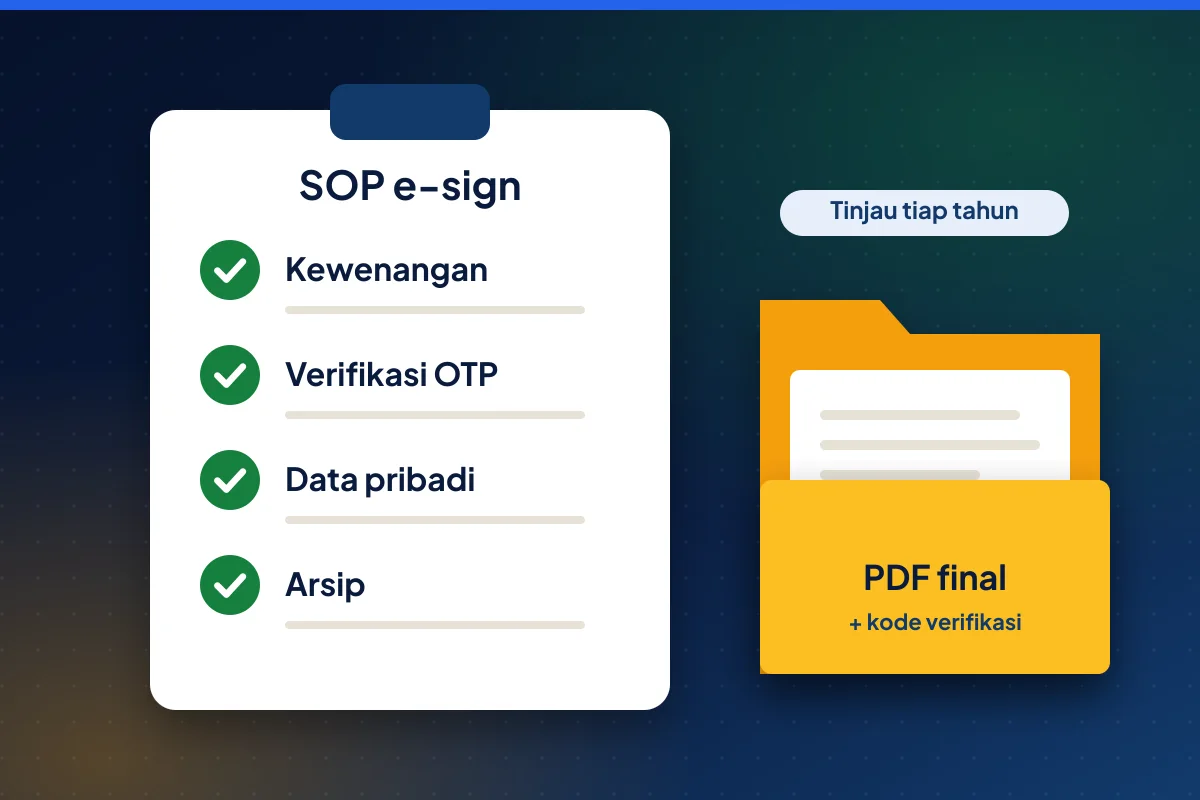
For agreements signed by customers online, OTP verification by email or WhatsApp on docs.resmi.id adds evidence that the customer personally agreed, and the audit trail records every step.
For finance companies, the business benefit shows in faster disbursement. An agreement signed and stamped electronically on the same day lets the next step proceed without waiting for physical files to come back from the customer, while proof of the customer's consent remains fully recorded.
Property businesses
Agents, building managers and boarding-house owners often deal with parties in other cities. Commonly stamped documents include:
- Lease agreements for houses, shophouses, offices or boarding rooms for a fixed term.
- Receipts for down payments, rent or booking fees above Rp5,000,000.
- Statements, for example a tenant's statement on building rules.
For example, a shophouse manager in Surabaya leases a unit to a tenant based in Medan. The lease is signed by both parties online with OTP verification, the first year's rent receipt is sent as a stamped PDF, and both files are stored with a verification code the tenant can check at any time.
Note that transfers of rights over land and buildings are made by deed before a land deed official (PPAT), which has its own procedure. e-Meterai on docs.resmi.id suits the documents around it, such as leases, statements and receipts.
People and HR
HR issues documents whenever someone joins, a contract is extended or an employee leaves. Employment agreements, confidentiality agreements and employee statements are agreements or statements subject to stamp duty. However, Article 7 contains two important exemptions:
- Receipts for salary, allowances, pensions and other payments relating to employment are not subject to stamp duty, for example an employee's monthly salary receipt.
- Diplomas of any kind are not subject to stamp duty. The elucidation covers certificates of attending training, courses and the like.
On docs.resmi.id, the approver role and signing order support HR workflows, for example a division head approves first, then the employee and director sign, and the e-Meterai is affixed once everyone has finished.
Building an internal stamp policy
- 1List documentsInventory the documents each team issues regularly, from sales to HR, with sample files.
- 2Mark what is taxableSeparate documents subject to stamp duty, exempt documents and those that need case-by-case review, then ask a tax adviser to check them.
- 3Set the workflowFor taxable documents, decide who prepares, approves and signs them, and enable e-Meterai in the relevant templates.
- 4Decide who paysState in the template whether the company or the other party bears the stamp duty.
- 5Review regularlyUpdate the policy when the rate, the value threshold or the document types in your business change.
Who bears the cost
Article 9 of Law 10/2020 sets out who owes the duty: for one-sided documents, the recipient; for documents made by two or more parties, each party for the document it receives. Paragraph (6) allows the parties to agree who pays. In every sector, the safest approach is to write that agreement into the document so it does not become an argument when the e-Meterai charge arrives.
Whatever your sector, the pattern is the same: identify the taxable documents, exclude the exempt ones, and make e-Meterai part of the signing workflow. docs.resmi.id brings templates, signer roles, OTP, an audit trail and Peruri e-Meterai together in one workflow for your business documents.
References
- JDIH BPK — UU Nomor 10 Tahun 2020 tentang Bea Meterai
- JDIH BPK — PMK Nomor 78 Tahun 2024 tentang Ketentuan Pelaksanaan Bea Meterai
This information is general and not legal advice. For important decisions, check the latest regulations at official sources or consult a legal professional.