Calculating the time and cost savings: e-Meterai vs paper stamps for business documents
Is e-Meterai cheaper than a paper duty stamp? Not on the tax itself: both pay the same stamp duty of Rp10,000 per document. The savings come from elsewhere, namely the cost and time of printing, affixing, sending, waiting for and then archiving paper documents. For a business that regularly issues contracts or high-value receipts, that difference can be felt every month.
 Resmi.ID Team · 5 min read ·
This article helps you calculate it yourself using your own business figures. All printing and courier costs below are hypothetical examples, not official rates, so replace them with the costs you actually incur.
What stays the same: the stamp duty rate
Law Number 10 of 2020 on Stamp Duty sets a fixed rate of Rp10,000 for every document subject to stamp duty (Article 5), and stamp duty is imposed once per document (Article 4). It can be paid with a paper stamp or an electronic stamp (Article 12). Switching to e-Meterai therefore does not reduce the tax you owe, and it is not supposed to.
One point that is often missed: Article 20 of Finance Minister Regulation (PMK) 78/2024 requires distributors to sell e-Meterai at face value, while retailers may sell at a different price. The price you pay per stamp may therefore differ slightly from Rp10,000 depending on where you buy it. Compare the total price, not just the face value.
What differs: the costs around the document
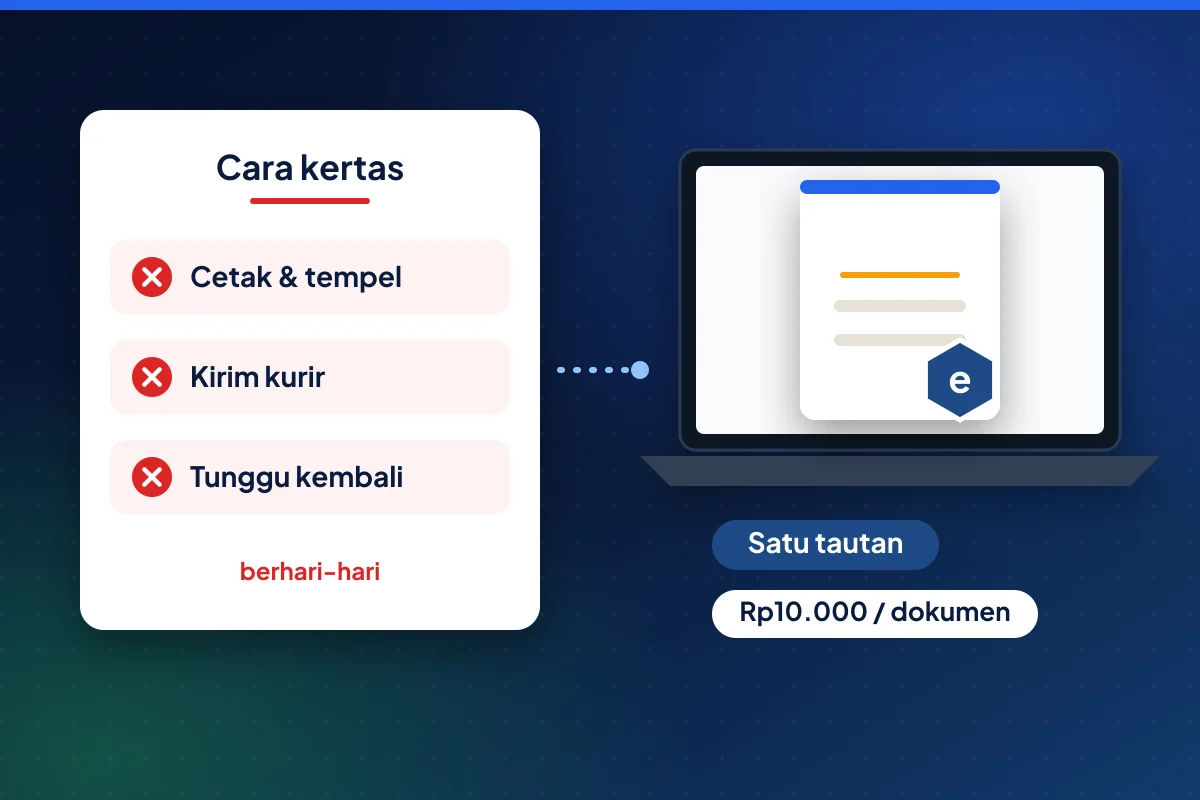
In a paper workflow, a stamped document usually goes through several steps, each of which costs money or staff time:
- Printing the document, often in more than one counterpart, then buying and affixing the stamp.
- Sending the document to the other party for signature, then waiting for it to come back.
- Scanning the completed document so it can be shared digitally.
- Storing the physical archive, including cabinets, folders and storage space.
- Repeating every step if a typo is found after the document has been printed.
In an electronic workflow, the document is sent as a PDF, signed through a link, and the e-Meterai is affixed to the final file. There is no printing, courier or rescanning. What remains is the cost of the e-signature service and the e-Meterai itself.
Example calculation: 20 contracts a month
The following example uses hypothetical figures for a service business that signs 20 contracts a month with customers. Each contract needs one stamp and is signed by two parties.
- 1Paper workflowPaper stamp Rp10,000, printing and binding about Rp5,000, courier pick-up and delivery about Rp30,000. That is about Rp45,000 per contract or Rp900,000 a month, excluding staff time.
- 2docs.resmi.id workflowSigning fee of Rp5,000 per signer times two parties, plus e-Meterai at Rp10,000. That is Rp20,000 per contract or Rp400,000 a month.
- 3Example differenceAbout Rp500,000 a month or Rp6,000,000 a year, assuming the paper and courier costs above.
Your figures may be higher or lower. A business in the same city as its customers may pay less for couriers, while a company sending documents between islands may spend far more. That is why the best calculation is one based on your own cost data from the last three months.
Time: the cost that often goes uncounted
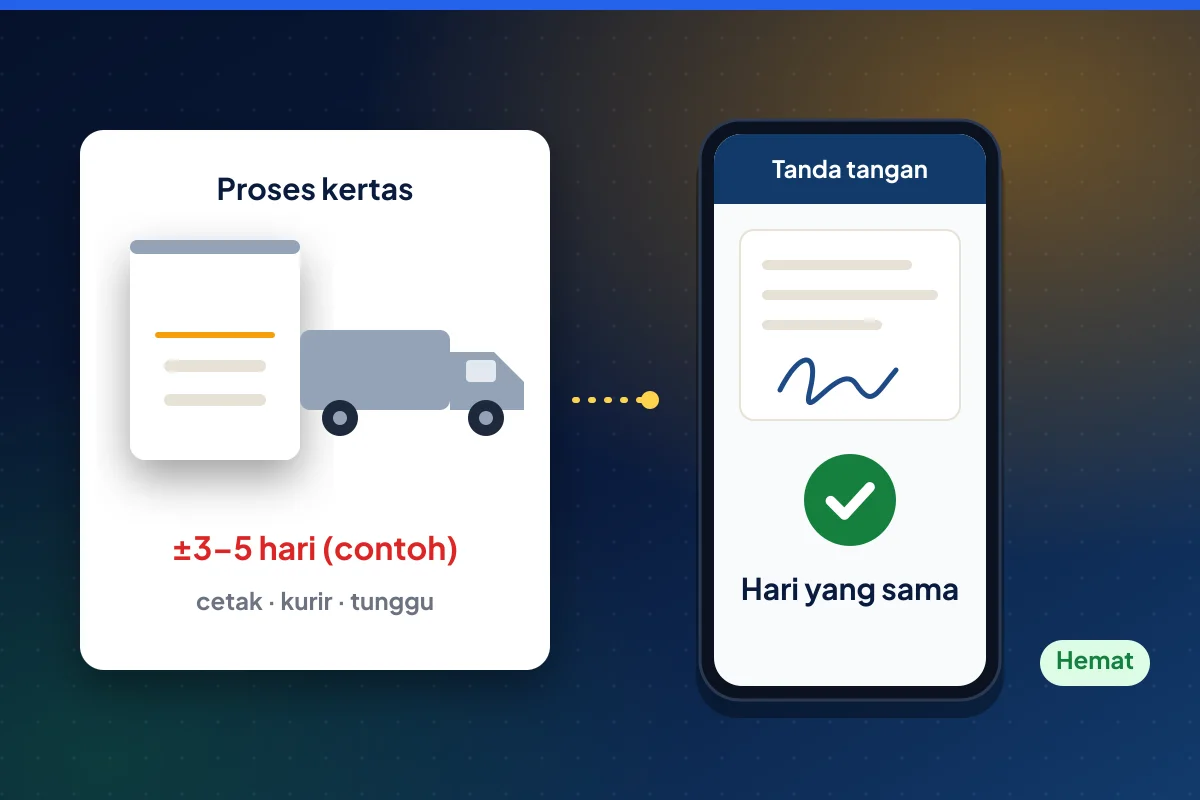
The biggest saving is often not money but time. A paper document that has to change hands can sit on someone's desk for days, even though payment, delivery of goods or the start of a project depends on it. With an electronic workflow, the other party can sign from a phone on the same day, and you can see in the dashboard who has and has not signed.
For example, a property agent is waiting for a lease agreement to come back from a tenant in another city. By courier, the process can take two to three working days. With a signing link, the agreement can be completed the same day, and the e-Meterai is affixed automatically once all parties have signed.
Hidden costs: wrong versions and lost documents
Besides printing and couriers, a paper workflow carries risks that rarely make it into the budget. Originals can go astray in transit, get buried on a desk or be damaged by water. The other party may sign an old version because the latest revision had not yet been printed. When that happens, the whole process has to be repeated, including buying a new stamp, because a paper stamp that has been affixed and signed over cannot be moved to another document. These repeat costs are rarely recorded, yet they can double the cost of a single document.
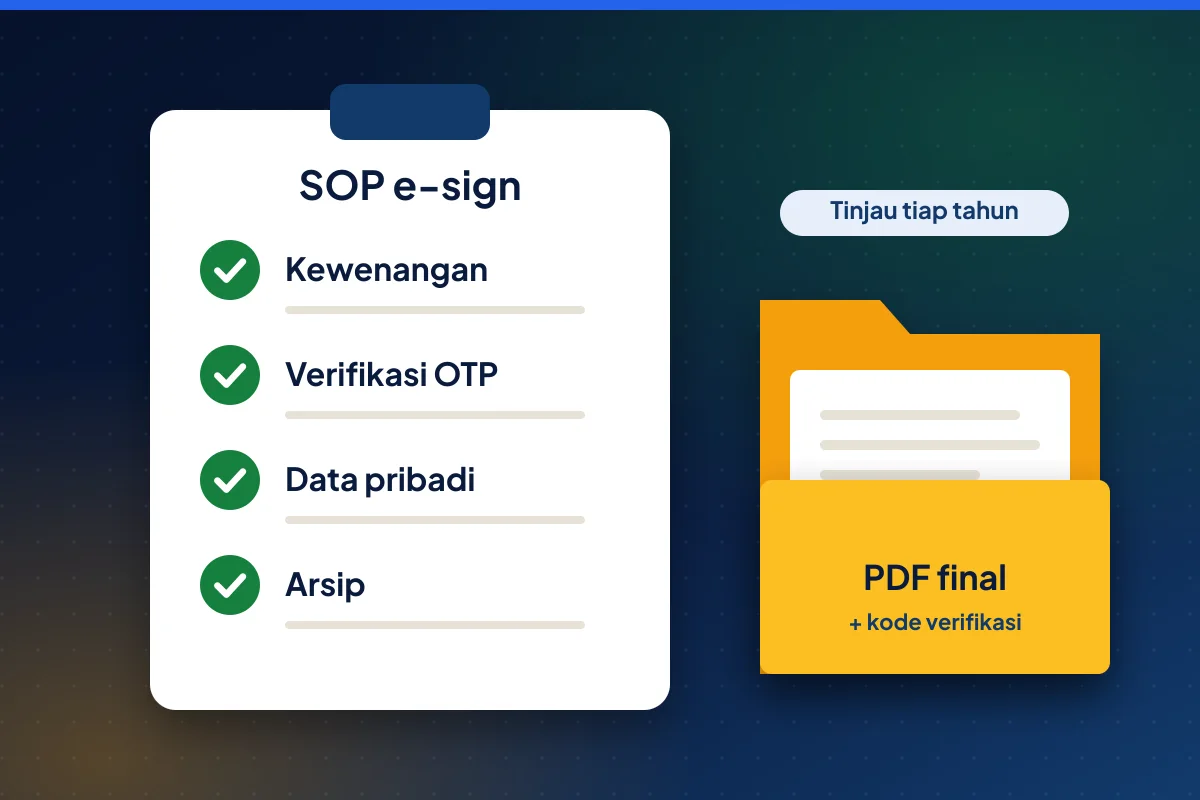
In an electronic workflow, that risk is much lower. Every party opens the same file, each signer's status is visible in the dashboard, and the final document has a verification code and an audit trail. If a revision is needed before all parties have signed, the document can be cancelled and prepared again without losing the e-Meterai fee, because on docs.resmi.id the e-Meterai fee is deducted when the stamp is affixed, not when the draft is saved. The archive is simply a PDF file you can find in seconds, not a folder in a cabinet.
When paper stamps still make sense
e-Meterai is not always the answer. Article 16 of PMK 78/2024 states that e-Meterai is affixed to documents in electronic form through the Electronic Stamp System. So for documents that genuinely must be made and signed on paper, for instance because the other party requires an original, a paper stamp remains the right choice. A business that stamps only one or two documents a year may also see little difference.
Getting started on docs.resmi.id
- 1Estimate your volumeRecord how many stamped documents you issue each month and how many parties sign them.
- 2Top up your business balanceSigning and e-Meterai fees are deducted from your Resmi.ID business balance.
- 3Use templatesSave frequently used contracts as templates so staff do not have to draft them from scratch.
- 4Enable e-MeteraiChoose the document type and stamp position when preparing the signing document.
- 5Consider the APIIf documents are issued from your system in large numbers, the docs.resmi.id e-Meterai API can affix stamps without signatures at Rp10,500 per stamp.
In short, e-Meterai does not make your tax cheaper, but it makes the process around it much lighter. Work out your paper, courier and waiting costs, compare them with the per-document cost on docs.resmi.id, and decide based on your own numbers.
References
- JDIH BPK — UU Nomor 10 Tahun 2020 tentang Bea Meterai
- JDIH BPK — PMK Nomor 78 Tahun 2024 tentang Ketentuan Pelaksanaan Bea Meterai
This information is general and not legal advice. For important decisions, check the latest regulations at official sources or consult a legal professional.