The complete guide to e-Meterai: legal basis, the Rp10,000 rate and documents covered
As more documents are created and sent as PDFs, the question has changed: how do you stamp a document that is never printed? The answer is the electronic duty stamp, or e-Meterai, which serves the same purpose as a paper duty stamp for paying stamp duty.
 Resmi.ID Team · 4 min read ·
 Photo: Vitaly Gariev / Unsplash
This guide explains the legal basis, the rate, which documents are and are not covered, who must pay, and the most common mistakes. For complicated cases, consult a tax consultant or your local tax office.
What stamp duty and e-Meterai are
Law No. 10 of 2020 on Stamp Duty, in force since 1 January 2021, defines stamp duty as a tax on documents. A document here covers handwritten, printed and electronic writing that can be used as evidence or as a statement.
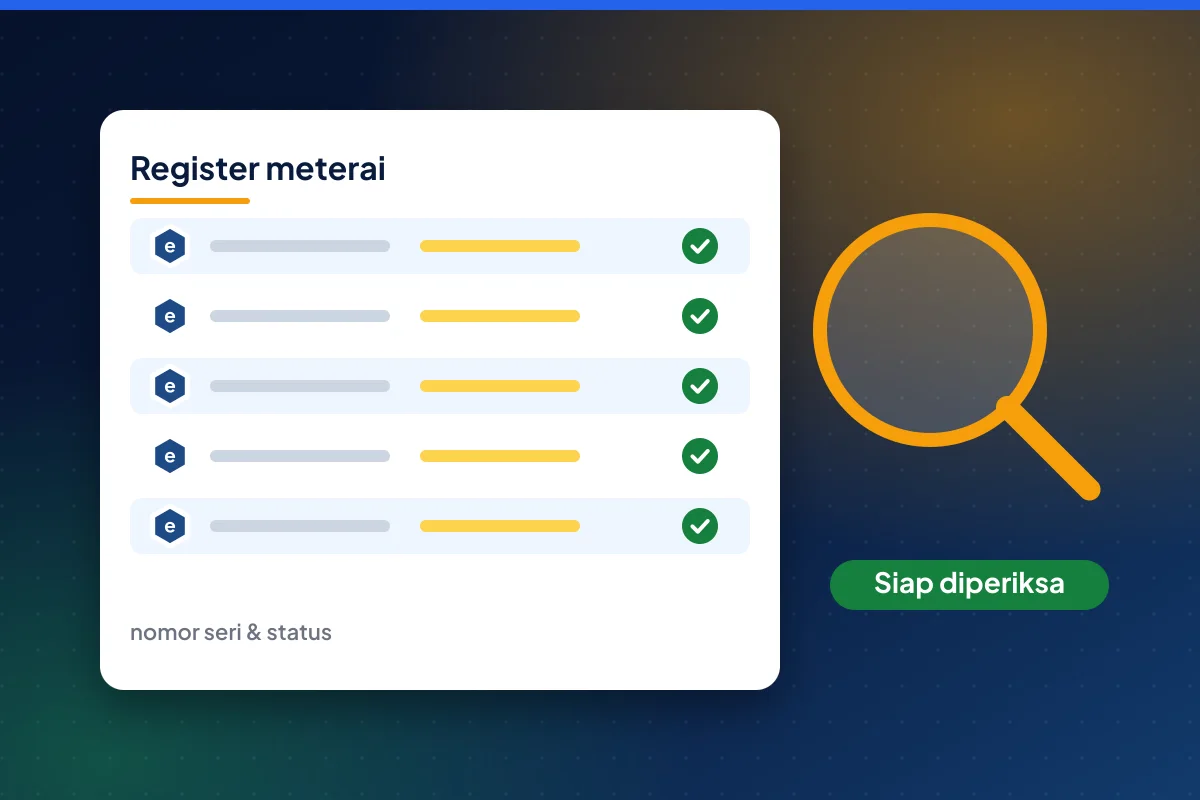
The duty is paid with a stamp or a tax payment slip. The stamp can be a paper (adhesive) stamp, an electronic stamp, or another form set by the Minister of Finance. Under Article 14, an electronic stamp carries a unique code and specific information, so each one can be traced.
Government Regulation 86/2021 assigns Perum Peruri, the state mint, to create and distribute electronic stamps. The implementing rules are now set out in Minister of Finance Regulation (PMK) 78/2024, in force since 1 November 2024, which replaced several earlier stamp duty regulations.
The rate: Rp10,000 per document
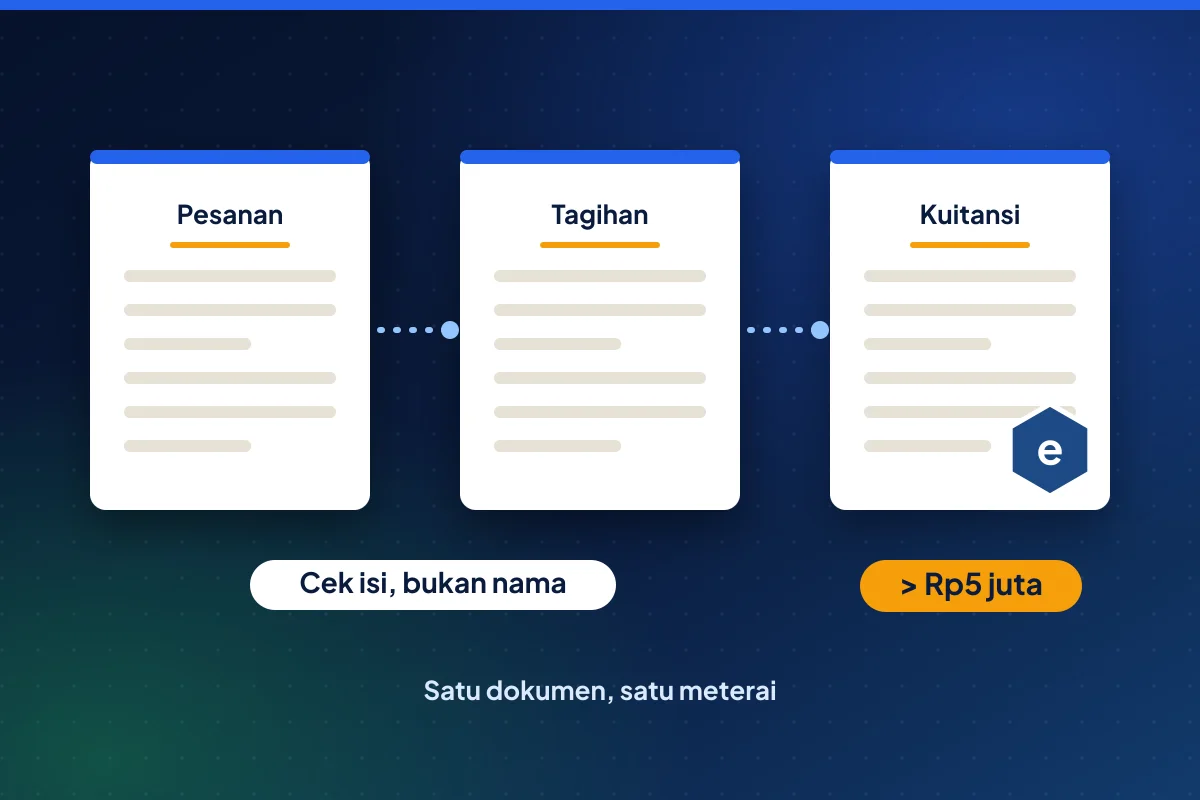
Article 5 sets a flat rate of Rp10,000 for every document subject to stamp duty, and Article 4 confirms that stamp duty is charged once per document. The elucidation gives an example: an agreement made by two parties in two counterparts means each counterpart is subject to stamp duty.
Documents subject to stamp duty
Article 3 states that stamp duty applies to documents describing a civil event and documents used as evidence in court. The civil documents include:
- Agreements, certificates, statements or similar letters, together with their counterparts.
- Notarial deeds with their engrossments, copies and extracts, as well as PPAT land deeds with their copies and extracts.
- Securities in any form, and securities transaction documents including futures contracts.
- Auction documents, such as extracts, minutes, copies and engrossments of auction reports.
- Documents stating an amount of money above Rp5,000,000 that mention receipt of money or acknowledge that a debt has been fully or partly paid or settled, such as receipts.
- Other documents designated by Government Regulation.
Documents not subject to stamp duty
Article 7 also lists documents that are not subject to stamp duty. Some of those businesses meet most often:
- Documents for the movement of goods and people, such as transport documents, bills of lading, and proof of dispatch or receipt of goods.
- Diplomas and certificates of education of any kind.
- Receipts for salaries, pensions, allowances and other payments related to employment.
- Receipts of money made for an organisation's internal purposes.
- Tax receipts and receipts of payments from state or regional treasuries.
Who pays and when it is due
For a one-sided document, stamp duty is owed by the party receiving the document. For a document made by two or more parties, each party owes duty on the document it receives. Even so, Article 9(6) lets the parties agree among themselves who bears the cost.
When the duty becomes due depends on the type of document. An agreement becomes dutiable when it is signed, while statements, certificates and receipts become dutiable when they are handed to the party for whom they were made.
Paper stamp vs e-Meterai
- 1FormA paper stamp is a physical label stuck on paper; an e-Meterai is a label applied to a digital file through a designated system.
- 2How to checkA paper stamp has physical security features, while an e-Meterai is checked through its unique code and the digital signature on the file.
- 3UsePaper stamps for paper documents, e-Meterai for electronic documents such as PDFs sent by email or signed online.
- 4RateThe same, Rp10,000 per document.
Common mistakes
- 1Treating stamps as a validity testStamp duty is a tax on documents, so an unstamped document generally remains valid but the tax is still owed.
- 2Pasting a stamp imageA screenshot or image of an e-Meterai pasted into a PDF is not a valid payment of stamp duty.
- 3Stamping before the final versionEditing a PDF after it has been stamped invalidates the stamp's digital signature.
- 4One stamp for many documentsEvery dutiable document needs its own stamp.
- 5Buying from unclear sellersUse official channels so the stamp you use was genuinely issued by Peruri.
- 6Forgetting large receiptsProof of receipt of money above Rp5,000,000 is subject to stamp duty.
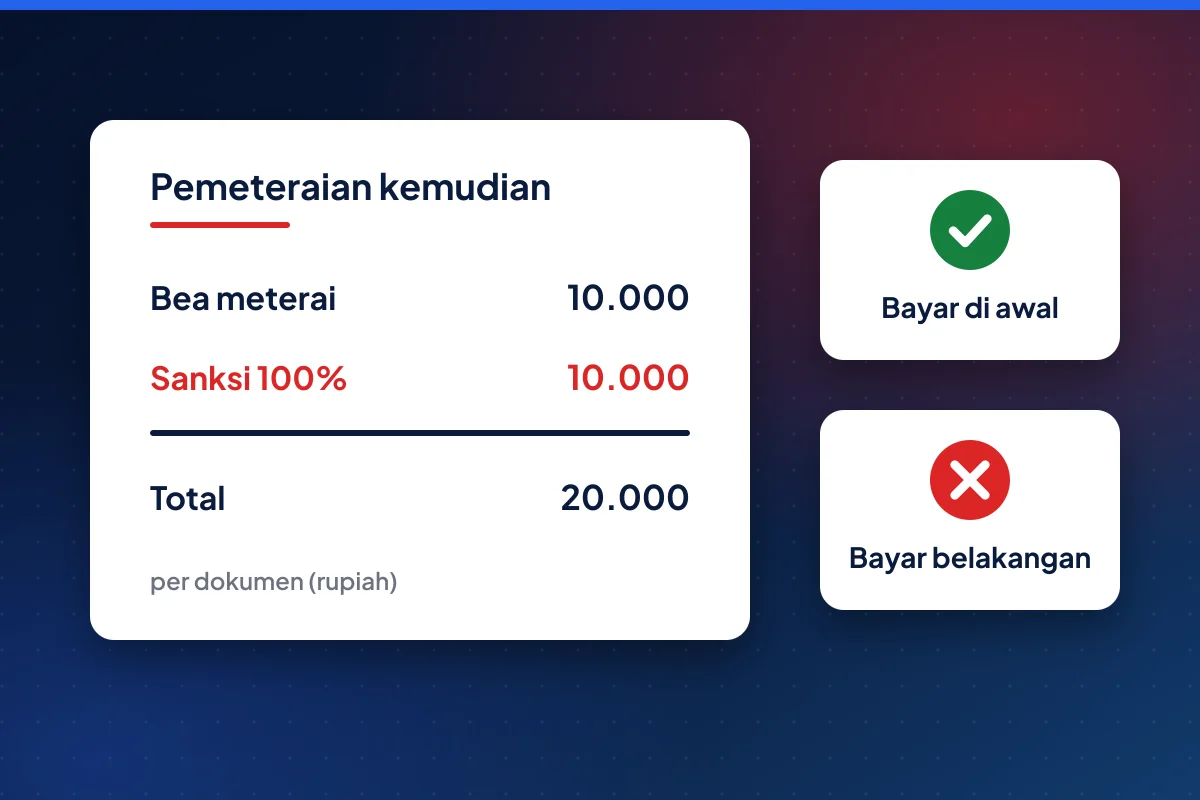
If stamp duty is unpaid or underpaid, it is settled through a process called post-stamping (pemeteraian kemudian). For documents that should have been stamped, Article 18 imposes an administrative penalty of 100 percent of the duty owed.
References
- JDIH BPK — UU Nomor 10 Tahun 2020 tentang Bea Meterai
- JDIH Kemenkeu — PP Nomor 86 Tahun 2021 tentang Pengadaan, Pengelolaan, dan Penjualan Meterai
- Kontan — Pemerintah terbitkan PMK 78/2024, sederhanakan aturan bea meterai
This information is general and not legal advice. For important decisions, check the latest regulations at official sources or consult a legal professional.